THE SIGNIFICANCE OF DEVELOPING A CULTURE OF CONCEPT-BASED INQUIRY IN THE CLASSROOM

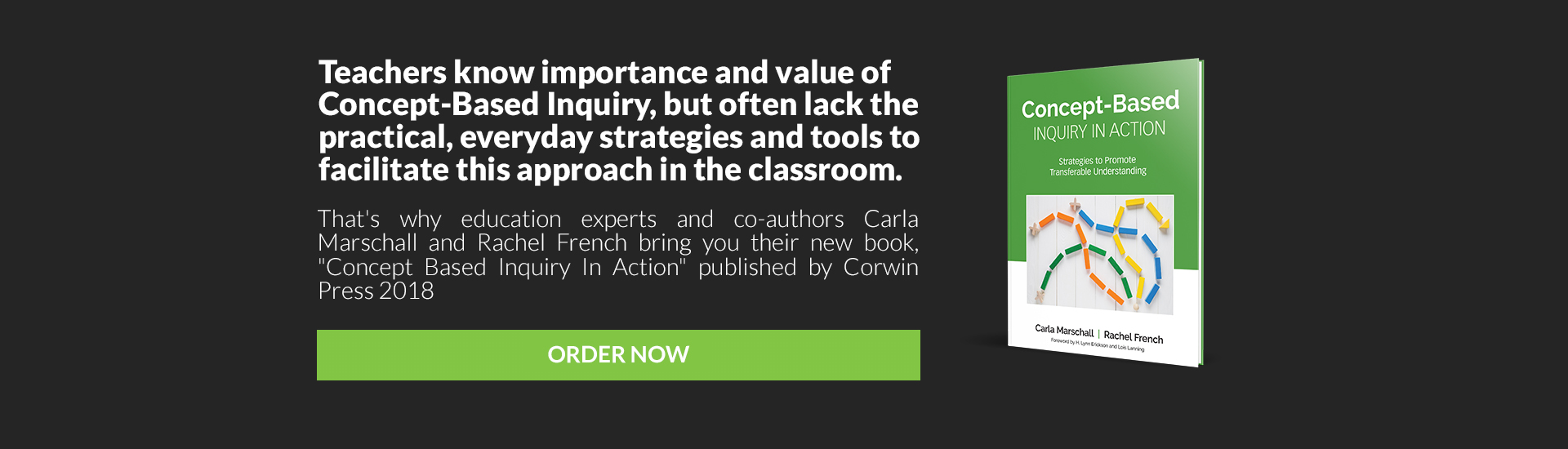
“As teachers, we often notice that some children are naturally strong at conceptual thinking. These students make rich connections, share insightful comments and transfer understanding from one study to another with little to no teacher support. Our experiences with these students may lead us to believe that some children can think conceptually while others simply cannot. This is untrue; all students can be conceptual thinkers. If we want to develop classrooms where rich discussion and meaning-making take place, we need to reflect on how we build a culture of Concept-Based Inquiry. Such classroom spaces create high expectations for students, while simultaneously championing collaboration and supportive relationships.”

Carla Marschall and Rachel French (2018)

As a teacher, you will be equipped to teach in a way that facilitates deeper student understanding.


We sourced the globe collecting examples of best practice in Concept-Based Inquiry.

Delving more deeply into conceptual learning with such young children has proved to me how that we must have high expectations of what they are capable of. I have been impressed with the clear generalizations they have formed. In just a short amount of time, they are building conceptual understanding that they will be able to transfer to different situations.


Melanie Smith
Grade 2 Teacher
International School of Amsterdam


RECENT BLOG POSTS

The Importance of Concept Formation

The Importance of Concept Formation

By Carla Marschall Recently I was sitting with my Grade 1 team, getting ready to plan their Body Systems unit with them. In previous years, the team felt they introduced too many systems to their 6-year-olds. As a result, the unit felt disjointed, a bit hodgepodge and was organized around
Toward Culturally Responsive Inquiry

Toward Culturally Responsive Inquiry

By Carla Marschall Our classrooms are diverse places. Not only do our students come from varying cultural and ethnic backgrounds, but have diverse home lives, experience sets and linguistic profiles. As inquiry teachers who look to help students make meaning in a study, we must recognize the importance of integrating

IN THE NEWS

Membangun Budaya Concept-Based Inquiry untuk Pembelajaran Mendalam di Kelas

Dalam dunia pendidikan modern, tantangan utama bagi para pendidik adalah bagaimana mengalihkan fokus dari sekadar menghafal fakta menjadi memahami prinsip-prinsip yang lebih luas. Membangun budaya concept-based inquiry merupakan strategi transformatif yang mendorong siswa untuk berpikir secara induktif dan menemukan pola di balik informasi yang mereka terima. Berbeda dengan pengajaran tradisional

Membangun Agensi Siswa: Memberi Kendali Atas Pengetahuan dan Pemahaman

Pendidikan yang efektif adalah pendidikan yang mampu memberdayakan peserta didiknya untuk menjadi pembelajar mandiri yang memiliki inisiatif tinggi. Membangun agensi siswa berarti memberikan ruang bagi mereka untuk mengambil peran aktif dalam menentukan arah, tujuan, dan cara mereka belajar di sekolah. Ketika siswa merasa memiliki kendali atas proses kognitif mereka, motivasi

PODCASTS

Podcast 3

Podcast 3

Welcome to Podcast Number 3.
Podcast 2

Podcast 2

Welcome to WordPress. This is your first post. Edit or delete it, then start blogging!

UPCOMING EVENTS

Upcoming Events 3

Upcoming Events 3

Welcome to WordPress. This is your first post. Edit or delete it, then start blogging!
Upcoming Events 2

Upcoming Events 2

Welcome to WordPress. This is your first post. Edit or delete it, then start blogging!

I’m very passionate about a Concept-Based curriculum because I think there’s something in the agency it gives students through them seeing knowledge and understanding as something that they have control over. When you deal with knowledge at a surface level, and students are able to simply parrot it back to you, they’re just reproducing what it is that you’re teaching and they have no agency in that process. When they’re engaging deeply with underlying understandings and constructing them for themselves, they come out of that process with the deep empowerment that allows them to think creatively and engage creatively in new thinking circumstances.


Ian Tymms
Head of Middle School English
United World College Southeast Asia


Contact us at action@conceptbasedinquiry.com